Not for profit planning
  • Home
  • Services
    • Accessible transport
    • Inclusive streets and public realm
    • Strategy and planning
    • Governance
    • Policy development
    • Culture and heritage
  • News and updates
  • About me
  • Blog

25 Years of Lothian Taxicard

8/1/2017

4 Comments

 
Lothian Taxicard, offering discounted taxi fares to disabled people, was started 25 years ago. As the council officer who was principally responsible for developing the scheme, I thought it a timely point to reflect on its history - and the possible future of such schemes.​

The introduction of a Taxicard scheme was not my idea; my then boss Keith Gowenlock proposed the service as part of ‘the multi-modal approach’ to accessible transport that Lothian Regional Council (LRC) was developing. This was supported by the head of the Public Transport Unit David Chambers, and at a political level, by Councillors Ron Muir and then David Begg who chaired the Transport Committee. The Lothian scheme was loosely modelled on the London Taxicard scheme which the GLC had funded for some time along with dial-a-ride services. Interestingly, a taxi subsidy scheme had also run in Edinburgh for a number of years, administered by the rather unfortunately-named Edinburgh Cripple Aid Society (which has since re-branded solely as ‘ECAS’). The ECAS scheme issued “chits’ giving discounted fares to a group of disabled people for use with a contracted local taxi firm, Radiocabs.
Picture
However, the ECAS scheme was not sustainable; for a start, it applied only to a small group of people in Edinburgh, and the Regional Council, which had taken over funding of the scheme, needed to ensure that services were available more fairly, including in the other districts in the Region (West, East and Midlothian).  ECAS was keen for the Council to take over administration of the scheme. For its part, LRC saw a Taxicard scheme offering several distinctive benefits which other services could not. In particular, although LRC funded the local dial-a-ride service Handicabs, and since 1990 a semi-scheduled Dial-a-Bus shopping service, these door to door schemes did not suit everyone. Getting through on the phone to secure a booking was a problem and not everyone wanted to (or could) plan their trips in advance. In addition, as a service specifically for disabled people, dial-a-rides were seen by some as having a degree of stigma as a ‘special’ or segregated service, and they provided limited choice to the passenger. Of course, mainstream public transport was a complete no-go area for most disabled people at this time as buses typically had three steps up to a high floor. Taxicard therefore complemented other door to door services and efforts to improve the accessibility of mainstream public transport.​

Edinburgh District Council had also been the first council outside London to stipulate that all taxis must become wheelchair accessible. Along with this requirement, Edinburgh led the way in training taxi drivers on how to assist passengers using wheelchairs, with mandatory sessions for drivers overseen by the Cab Office, then managed by the police. Unquestionably, not all taxi drivers welcomed these new obligations, but a Taxicard scheme could complement these regulatory measures by encouraging disabled people to use taxis, stimulating customer demand.

So the Lothian Taxicard scheme was launched in 1992, offering a maximum of 104 single trips a year (this maximum limit echoed the demands of the ‘One Trip a Week’ campaign for dial-a-ride funding which I had led in London a few years earlier). The chief criterion for eligibility for a Taxicard was that the applicant was unable to use buses. Local taxi and private hire companies were invited to participate in the scheme, so that there was usually both a choice of service provider, and of vehicles type. The user had to make a minimum payment of £1.00 and would pay no more until the fare exceeded £5.00; anything above that was payable by the passenger. In 1992, this subsidy of up to £4 per trip paid for a reasonable distance. Triplicate receipt pads were issued to participating companies, with passenger, council and taxi firm each getting a copy. The scheme was launched in West Lothian and then rolled out to the other councils with (from memory) an annual budget of £0.5 million. It is hard not to feel a little nostalgic for a time when a local authority had both the money and the political will to initiate new services like this!

Unsurprisingly, the scheme was immediately popular, with rapidly-developing demand for Taxicards and immensely positive feedback. The number of trips by Taxicard quickly outstripped those by dial-a-ride and Dial-a-Bus, and with a financial ceiling per trip, it represented a cost-effective way of significantly increasing travel options for many disabled people to the council. A Taxicard Users’ Association developed, which became influential as a disability-led group campaigning for accessible transport. The scheme was part of the reason that Lothian Regional Council won the first Equality Award by the European Commission in Scotland in 1995, and several other regional councils introduced similar schemes. However, controlling budgets was always a problem and it was administratively cumbersome, with thousands of trip slips processed monthly to control the 104 limit and to check taxi invoices. Eligibility was largely controlled through requiring that Taxicard applicants did not also hold concessionary travel (bus) permits but eligibility was always prone to ‘grey areas’ given that people do not neatly fall into two boxes - those who can, and those who can’t ‘use conventional buses’. As buses have become more accessible and concepts of disability (including mental health) have changed, eligibility has no doubt become more contested.

The scheme survived local government re-organisation in 1996, with each of the four successor unitary councils in the Lothians maintaining their own Taxicard schemes. However, over the years, the benefits provided have been eroded as senior officials gave the scheme less priority and reduced budgets. The minimum flat rate contribution by the passenger was raised to £2.00 and over time, the remaining £3.00 subsidy went less and less far - literally - due to taxi fare inflation. Perhaps I’m reading more into this than I should, but I’m struck how the scheme logo in Edinburgh today is completely unchanged from 1992! While the scheme continues in the local authorities today, Midlothian closed the scheme to new entrants in 2015.
Picture
Looking to the future, while Taxicard continues to play a valuable role, the role of such schemes seem uncertain in the longer term. Council budget pressures and the improved accessibility of buses are the most obvious immediate challenges. But technology is also providing new opportunities not just for improved administrative efficiency, but also for service innovation. Most obviously, the emergence of Uber and perhaps other ‘Mobility as a Service’ (MaaS) developments may make the old Taxicard model obsolete. If Uber (or similar services) become more widespread and can undercut taxi fares by say 20%, does it make sense for the public purse to subsidise taxi fares by say 10% through a Taxicard scheme? Of course, fare levels are not the only factor - the conduct of the driver and the accessibility of the vehicle are other important aspects of a service, for example. However, it looks likely in the longer term that new opportunities to provide door to door transport on demand and more cheaply will develop, perhaps one day even using autonomous vehicles?  This must be a good thing. For now, I see real opportunities for some creative thinking at a national level (especially in Scotland) on how to encourage low-cost door-to-door services provided by the private sector, perhaps leveraging concessionary travel budgets (see also my blog here).​
However, there is no doubt in my mind that the Lothian Taxicard scheme made a huge impact in opening up the possibility of spontaneous travel for many disabled people. It also contributed to making taxi services more disability-friendly and helped raise the bar - in terms of both expectations, and delivery - of inclusive travel in Scotland. These are important legacies
4 Comments

We need to count the short walks too...

5/29/2017

0 Comments

 
Most mornings, I go to my corner shop to buy a newspaper, a distance of maybe 30 metres.  Should I ever be asked to contribute to official Scottish transport statistics through participating in the Scottish Household Survey, these trips would be completely invisible. The Survey asks only about trips on foot (or by bike) of a quarter of a mile or more (1). 
Picture
Walking also plays an essential part in many motorised trips - most obviously by bus, where walking to and from the bus stop is clearly a normal part of the journey chain, but also those car journeys which don’t involve door to door parking. These walking trips are similarly invisible in official statistics. As a result, Transport Scotland states that walking’s ‘modal share’ is only 22% of all journeys (compared to 64% by car) (2). Can driving really be three times more common than walking?
​

This matters principally because the exclusion of short trips skews the real pattern of people’s travel, under-representing walking and over-representing the importance of the car. This reinforces assumptions about the importance of motor transport and spending on roads as the obvious priority for investment in transport infrastructure. The infrastructure that enables short walks to take place - two pavements and a traffic light-controlled crossing in the case of my morning trip to the corner shop - is every bit as important as that which supports longer journeys.

The exclusion of short, local walking trips is also likely to reduce the visibility of journeys by older, poorer and disabled people. We know that there is a strong correlation between wealth, car use and walking: in Scotland 55% of people in households with an income of less than £10,000pa have no driving license, compared with 11.2% of those in households with an income of more than £40,000 (3). Many people who have no car - probably low income and elderly people in particular - will make frequent trips on foot within their neighbourhood that are rarely accounted for in official statistics.

Elsewhere, the National Travel Survey conducted for the Department of Transport excludes walks of under 50m, rather than a quarter of a mile. Curiously, the reported ‘modal share’ of walking is exactly the same as Scotland (22%) (4). Transport for London which has begun to use the International Walking Data Standard (5), publishess the distribution profile of walk-only trips, which shows the importance of including the shortest ones:
Picture
This illustrates the important effect of removing walking trips of less than 0.4km (quarter of a mile). However, even more significant is the walking part of a transport ‘chain’ such as to or from a bus stop, train station or car park. In London, it is estimated that these ‘walking share’ trips are *three times* as numerous as ‘walk-only’ trips (6).
​
Journeys on foot are far more numerous, and important, than official statistics (in Scotland at least) show. I see modal transport share a bit like an ecological pyramid - if aviation is the polar bear or shark at the apex perhaps walking is the krill at the base?  The shortest walks, the indispensable bread and butter of so many individual journeys, are like the invisible plankton that feed the krill and supports the whole transport ecosystem.
Picture
(1)   https://www.transport.gov.scot/publication/scottish-transport-statistics-no-35-2016-edition/SCT01171871341-17  

(2) https://www.transport.gov.scot/publication/scottish-transport-statistics-no-35-2016-edition/SCT01171871341-14/#tb1
(3) Scottish Transport Stats 35 Chapter 11 table 11.10

(4) https://www.gov.uk/government/uploads/system/uploads/attachment_data/file/550859/nts2015-notes.pdf 

(5) http://www.measuring-walking.org

(6) http://content.tfl.gov.uk/travel-in-london-report-8.pdf
0 Comments

Time to re-think concessionary travel spending

2/27/2017

0 Comments

 
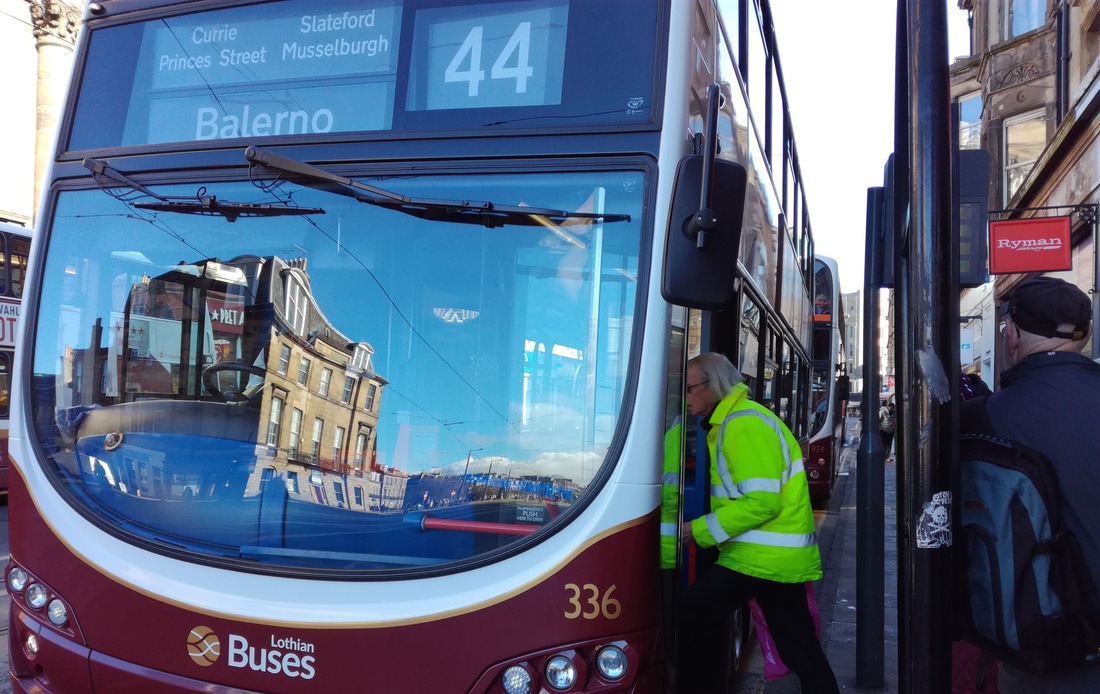
In January, the Scottish Transport Minister Humza Yousaf announced that there would be a consultation on the future of Scotland’s concessionary travel scheme (1). The current scheme, which was set up in 2006, has faced criticism on the grounds of escalating cost - £207.8 million in 2016-17 (2) - and also from bus operators, who have seen reimbursement levels fall in recent years to a new low of 56.9% of the standard fare (3).

Update September 2017 - consultation on scheme open until 17 November 2017 bit.ly/2guM5Ag 

However the review is also timely in providing an opportunity - overdue at that - to review the value for money of the social benefits that the scheme provides. Leaving to one side wider issues of taxation and spending, the very considerable concessionary travel budget is currently poorly targeted at people who need it.
Picture
Concessionary travel only make sense if it enables people to travel who could otherwise not afford to. So logic demands that it should be targeted at people on low incomes.  But most concessionary travel spending is not aimed at people on low incomes, but rather at an arbitrary age bracket: those over 60 years old. And yet, the ‘young old’ (people in their 60s) are one of the better off age groups in the whole of society (4).
​

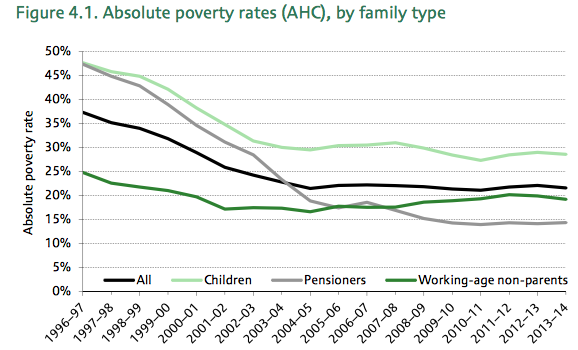
The increasing affluence of older people is not a new phenomenon; over the past thirty years, the old link between poverty and old age - once a justifiable basis for age-related travel concessions and other social security benefits - has not just reduced, but has disappeared entirely.  Older people (i.e. those who qualify for free concessionary travel on age grounds) are now one of the least-poor age groups in the UK as the chart below from the Institute for Fiscal Studies shows (5).
Picture
Audit Scotland has observed “research shows that [the National Concessionary Scheme] has had only limited impact on improving social inclusion, improving health or promoting a shift from car to bus” (6) - the key objectives of the scheme. In view of these limited benefits, the case for spending more than a billion pounds every five years on concessionary travel for over-60s is becoming weaker every year.
​

Of course, concessionary travel is not aimed only at older people; the scheme has long been been open to blind and disabled people, and this aspect of the scheme seems well justified. However, it is important to acknowledge too that there is a major gap in the scheme. Thousands of disabled people who can’t use the bus - for example because it isn’t accessible or the bus stop is too far away - derive no benefit at all from the scheme as it stands.
So what are the options? Unless there is some change, it is likely that the scheme will become unsustainable, because of rising costs and/or insufficient payment to operators. What would happen if the scheme was abolished entirely? Far from seeing an end to cheaper travel, it is likely that the government scheme would be replaced by a new range of (less generous but privately-funded) discounted fare schemes marketed by bus companies at off-peak times, when the marginal cost of carrying a passenger is virtually zero. The fiscal savings would enable the Scottish Government to significantly compensate low income elderly people who would most lose out through the tax and benefits system, perhaps targeting especially the poorest age groups, like those over 80. 

However, there would be other consequences - despite the stated intention of concessionary travel arrangements to leave operators “no better nor worse off”, there would almost certainly be an adverse effect on bus services which are already experiencing a long term crisis in use (7). There is no question too that many people do benefit from concessionary travel and these benefits should not be dismissed lightly. It is politically inconceivable that the scheme would be scrapped entirely.
Depending on how much of the £200 million per year the Scottish Government is willing to potentially reallocate (and again leaving aside wider tax and spending questions) there are many options which could be considered. Increasing the age of entitlement to travel concessions, as has happened with state pensions, would save a lot of money, but it would also be a blunt instrument, affecting poorer and wealthier people equally. Another option to reduce the budget would be to limit the time that free travel is available under the scheme; applying concessions after the morning peak would especially save money as many buses are at capacity at this time.

Options for redistributing budget could include providing more direct support to bus services generally; however, as the current scheme is intended as a subsidy for passengers, rather than operators, the fairness of this switch is questionable. Offering free travel to young people (generally, a poorer age cohort than 60-somethings) could assist with job and college travel and encourage a sustained culture of public transport use; but of course that too would be a blunt (and expensive) instrument, like any other age-related eligibility criterion.

My favoured option would be to return to free travel concessions being principally aimed at encouraging local travel. In urban Scotland, this would mean free travel within local cities and surrounding areas while in rural areas, ‘local’ travel still often involves long distances. However, should the scheme pay for expensive long-distance leisure trips that many relatively affluent and mobile pensioners can currently enjoy for free? A study of the distribution of journey lengths funded by concessionary schemes showed that 19% of trips were over 25 miles long (8). The fares for longer bus trips are of course more expensive than for short bus trips; so it would be reasonable to assume that these longer trips make up at least 20% of the concessionary travel budget (perhaps considerably more). My guess is that, even allowing for the need to keep concessions for longer distance ‘local’ travel in rural areas, excluding of long-distance leisure trips from the free scheme might save 10% or more of the current budget; this would in itself provide some £20 million each year which could be used more effectively. 

For me, the unique opportunity is to address the long-standing anomaly of disabled people who have the most significant mobility restrictions being excluded from the benefits of concessionary travel entirely.  Community transport ‘Section 19’ operations could become eligible for concessionary travel and more ambitiously, a national taxi subsidy scheme for people who can’t use buses and need door-to-door transport could be established. Both of these could be easily achieved at a relatively modest cost. 

This is the time not just for tweaks to the current scheme but for fresh and imaginative thinking on how public money can best be used make travel truly inclusive. To do this, we must move away from outdated spending models based on arbitrary age groups and focus more on need.
References:
  1. http://www.bbc.co.uk/news/uk-scotland-scotland-politics-38718556
  2. http://www.gov.scot/Publications/2016/12/6610/14
  3. http://www.transport.gov.scot/system/files/documents/tsc-basic-pages/Transport%20Scotland%20agreement%20letter%20to%20CPT.pdf
  4. http://www.poverty.org.uk/04/index.shtml. 
  5. https://www.ifs.org.uk/uploads/publications/comms/R107.pdf
  6. http://www.audit-scotland.gov.uk/docs/central/2010/nr_101007_concessionary_travel.pdf
  7. http://www.transport.gov.scot/report/SCT01171871341-05.​
  8. https://www.transport.gov.scot/publication/concessionary-travel-customer-feedback-research-year-one-report/
0 Comments

Involve disabled people early in planning driverless car revolution

2/13/2017

4 Comments

 
“As a blind person, I am in favor of driverless cars…I really really really really want driverless cars right now! Free at last! Free at last free at last!”
Comment on Youtube
https://www.youtube.com/watch?v=XEebyt6G5kM
​
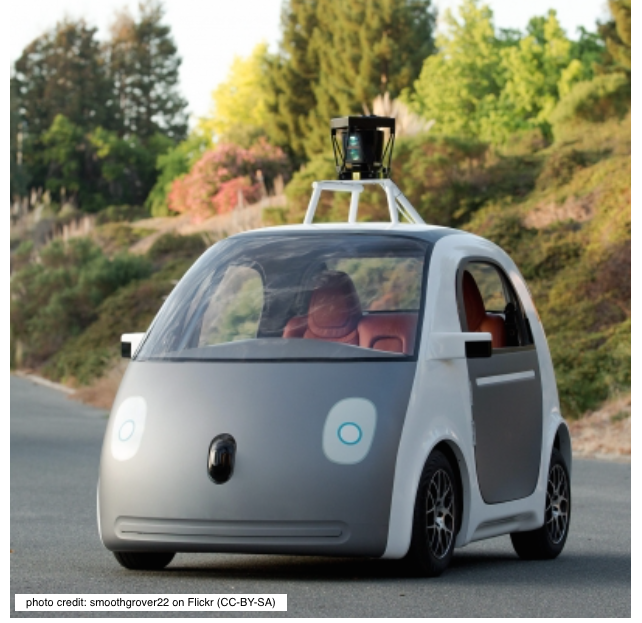
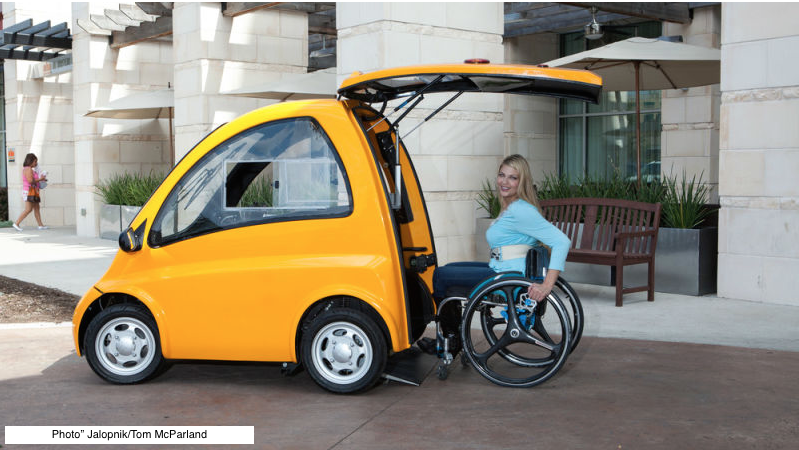
Many disability advocates have begun to see the prospect of the driverless car or autonomous vehicle (AV) as a truly revolutionary mobility solution. Although it is entirely possible that predictions of an imminent driverless car revolution have been overhyped (1), let us assume that the model of ‘Mobility as a Service’ takes hold. In the future, it becomes the norm for people to summon a driverless (electric) car that meets their requirements at a moments notice through an app, ‘Uber-style’. Payment will be based on use and because of the economics of intensively-used vehicles, to own and use a private vehicle will become unattractive for most people.
Picture
It is easy to envisage the advantages that on-demand driverless vehicles would offer to many people with a disability especially for those who cannot currently drive, such as people with visual impairments, conditions such as epilepsy and certain physical conditions (2). We can assume (perhaps rashly) that driverless vehicles are designed in order to be physically accessible to a wide range of people with various disabilities and mobility requirements (including wheelchair users). Autonomous vehicles (AVs) will appeal to people who need or prefer door-to door transport, while for drivers, problems with ‘parking’ should be greatly simplified, if not eliminated. There is also evidence (3) that some disabled people are discouraged from using public transport by the potential attitudes of other passengers or drivers, a problem which driverless cars would eliminate.
On the other hand, AVs may present a number of barriers for many disabled people. Those who lack confidence in travelling, or who experience high degrees of anxiety, may continue to want the reassurance of a human presence in order to travel. This may apply particularly to older people, especially the very elderly, people with dementia and people who require personal assistance even with mundane tasks like getting their coat on.  Another factor of course will be cost; we don’t yet know what the costs of AV use would be, but even if they are much cheaper than private cars, many disabled people may be unable to afford them. Availability (and cost) in rural areas may be especially problematic.
Picture
How people access and use the AV’s themselves is not of course the only issue; the impact of AVs on streets and other road users - especially pedestrians - is another important element of the whole package. We know that safe pedestrian environments are important for many older people to travel with confidence (4). The speed and proximity of AVs to pedestrian spaces, the functioning of pedestrian crossings in an AV environment and the redesign of streets where parking is no longer required are other aspects that need to be thought carefully through.

Like any service under development, there is a risk that unless disabled people are involved early on, questionable assumptions about what they can or want to do are made; for example, in this an article on the driverless cars in the Huffington Post: “For obvious reasons, those with physical disabilities often cannot learn to drive cars, but it also extends to those with mental incapacities; for example, those with epilepsy” (5). 

The key must surely be early involvement of disabled people not only in technical design of autonomous vehicles themselves but also in the planning of the whole service model, so that an ‘inclusive design’ approach is taken at the outset. While it is encouraging that projects like GATEway have begun to explore this area (6), there was no discussion of the impact of AVs on disabled people  in the UK Department of Transport’s Pathway to driverless cars published last month (7). There is, as the Ruderman Foundation concluded last year, “an urgent need to develop a common agenda at the intersection between autonomous vehicles and disability policy” (8). This requires much clearer and more transparent engagement at all levels between disabled people, technical and regulatory agencies in both the public and private sectors.
References
1) Driverless cars: the road ahead is difficult, NESTA, July 2016 

2) Driverless driving for disabled people within the decade? Robin Christopherson, June 2016

3) Understanding why some people do not use buses, Scottish Government Social Research 2010

4) Importance of safe pedestrian environments to ensure older people travel with confidence.  Musselwhite, C, October 2016

5) Huffington Post, January 2017 

6) GATEway demonstrates how teleoperation and autonomy can improve mobility for disabled drivers, GATEway, January 2017 

7) Pathway to driverless cars, DfT January 2017

8) Ruderman Family Foundation, January 2017
4 Comments

Soaring van traffic points to smart road pricing?

1/26/2017

1 Comment

 
There is currently much discussion about autonomous vehicles and the impact that they will have on our streets. Some anticipate that they will make private cars, buses and taxis virtually obsolete by 2030. Others are more sceptical. But we do not need to look 15 years into the future to anticipate significant changes in how roads are used; they are already evident.
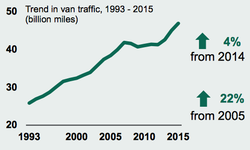
For example, van traffic in the UK has increased by 70% in the past 20 years and is currently growing at 4 % a year. This is likely to be due in part at least, to the ever increasing rise in internet shopping and home delivery. What are the implications for our streets?  
Picture
Picture
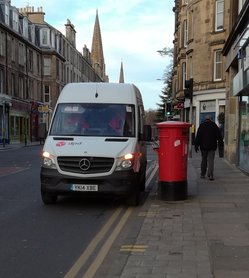
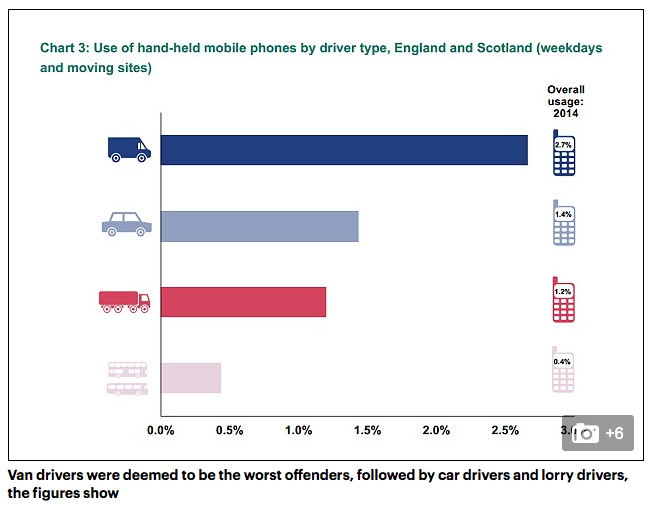
Without wishing to jump to “white van man” stereotypes, it is hard to avoid concluding that there are a number of negative impacts on streets and their users. ​ A 2015 study by TRL found van drivers to be twice as likely as other drivers to use phones while driving. Anecdotally, vans seem particularly prone to illegal parking/loading, pavement parking and poor driving standards generally, encouraged no doubt by the employment and productivity pressures which apply to many van drivers. This can only have a negative impact on pedestrians, cyclists and indeed other drivers. 
Picture
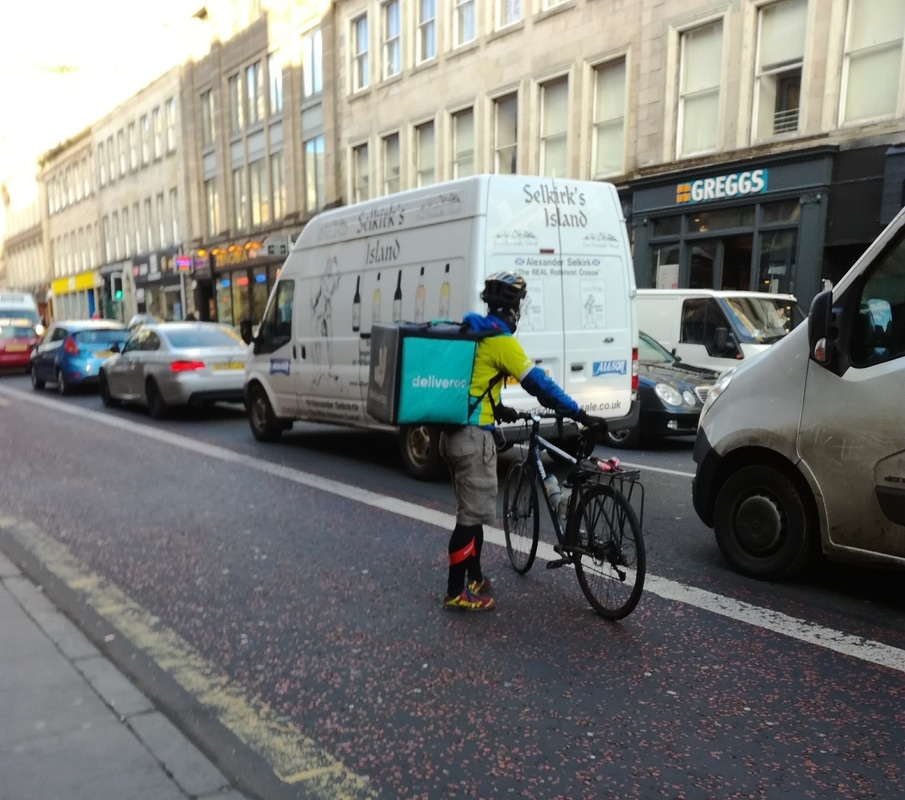
The rise of Uber is another recent change in traffic patterns, which is certainly disrupting traditional taxi businesses in urban areas and has led to calls for more regulation. But it is not only motor vehicle patterns which are changing; on a recent 20 minute walk I made through Edinburgh in the early evening, I passed 6 cyclists - five of which were Deliveroo couriers, whose road behaviour has also been subject to criticism. Deliveroo started operations only in 2013.
Picture
Companies generating new traffic like Amazon, Asos, Uber, Deliveroo, etc have business models built on the free use of a public asset: the road. Of course, we love home delivery of shopping and take-away food, and low ‘taxi’ fares. But it raises the question of whether commercial road users should pay more for using assets that they currently use for free - especially if their behaviour puts a cost (in terms of safety, convenience and accessibility) on other road users. The current taxation regime (for fuel, VED etc) is a very blunt instrument for making road users pay a fair price for using roads. In the longer term, ‘smart’ road pricing may become more acceptable as a means to apportion charges on road users more fairly, on top of the growing need to curtail urban traffic because of congestion and air quality. Indeed just this month the London Assembly has called for urgent reform to the capital's Congestion Charge. As so often, the technology is there, but the legal and regulatory environment lags behind.
1 Comment

 Getting Street Maintenance Right: Devil in the detail

12/2/2016

0 Comments

 
Good streets are not just about strategic ‘place-making’; we also need to give more attention to improving mundane operational practice in street maintenance to make them work better for people. The devil is often in the detail; here are some examples from Edinburgh of poor practice that is all too common in day-to-day street design and maintenance. Of course, these kind of things in themselves have only a small adverse impact on streets, but multiplied hundreds and thousands of times, they make walking less attractive and safe. Putting this right is an opportunity to make streets better bit by bit - and at little or not cost. There is a role here for quality management processes and professional bodies like IHT, but most of all we need to develop a culture that places a higher value on good streets and a quality public realm.

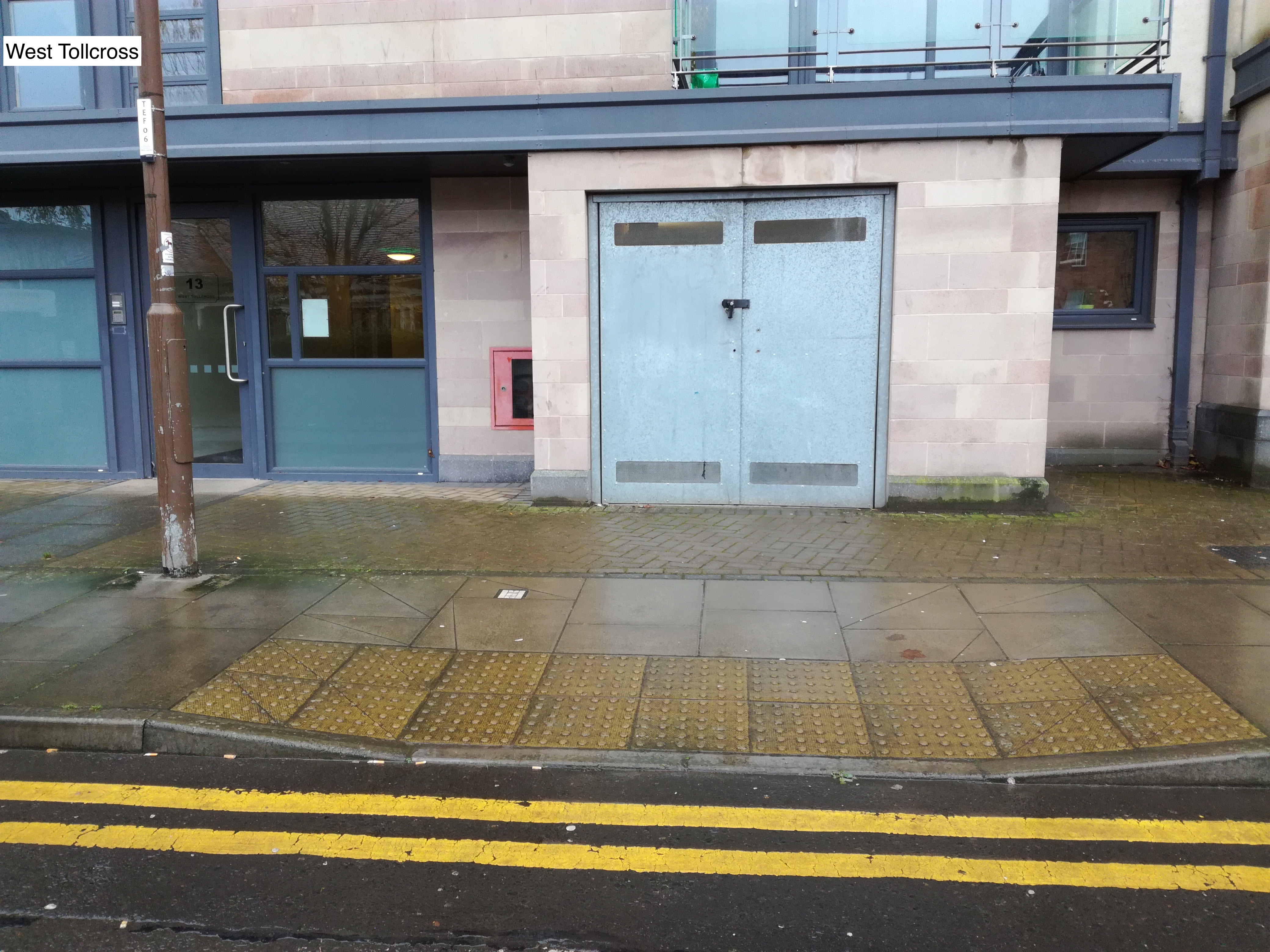
Wrong tactile paving

This bin store for flats has its very own tactile paving: someone has thought “dropped kerb, so we need tactile paving”. This signals to a blind person that this is a safe place to cross the road. Of course there is no crossing here - the tactile paving leads to a row of parked cars on the other side of the street.
Picture

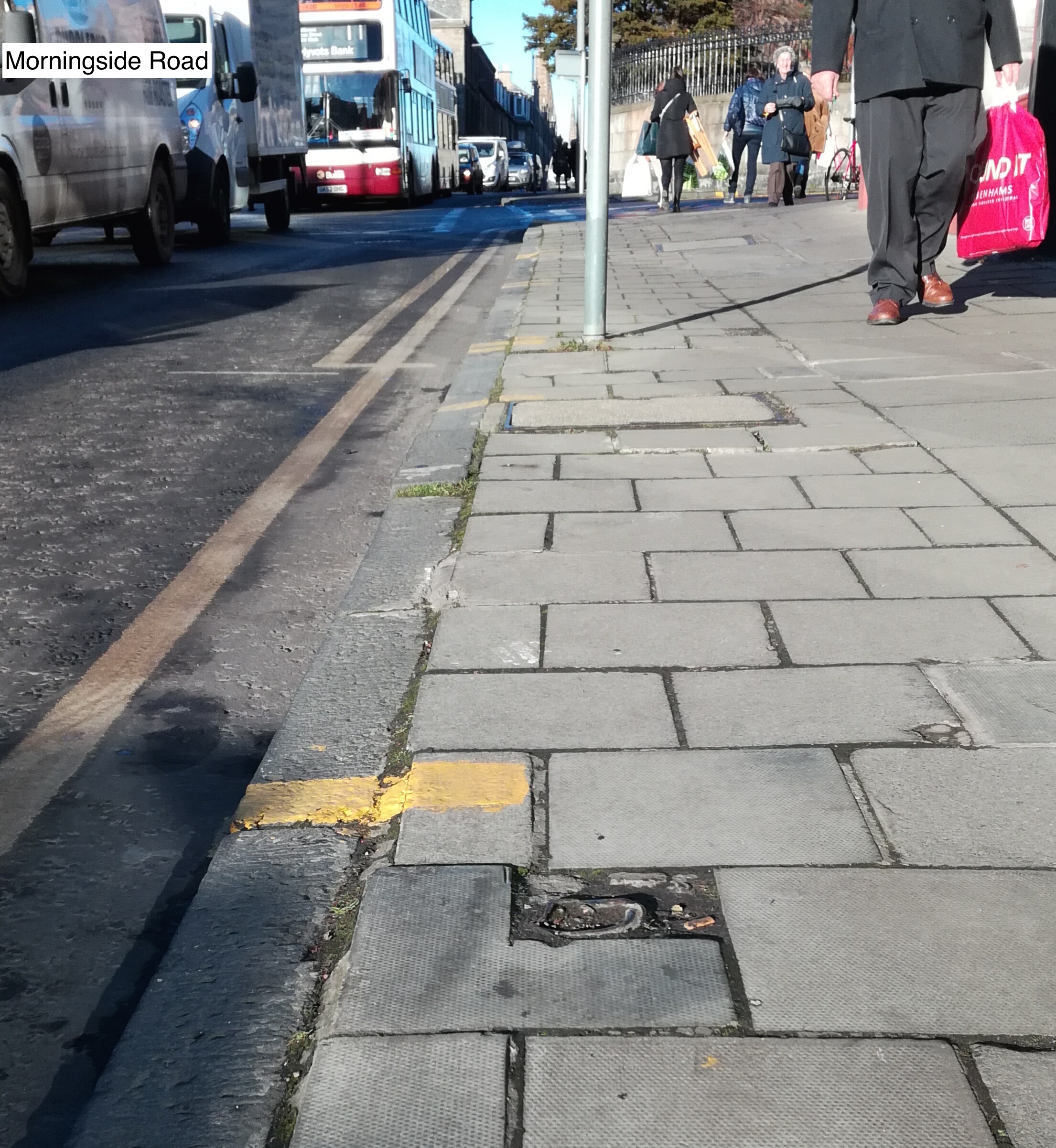
Poles cut off

While I welcome the removal of redundant signage poles on pavements (better of course, don’t install them in the first place), where they are removed, this should be done properly. This means no remnant stumps, and pavement surfaces should be fully re-instated. On a recent visit to Glasgow, a ‘Walkable Communities’ participant from the continent commented on an example: “How do they get away with this??”
Picture

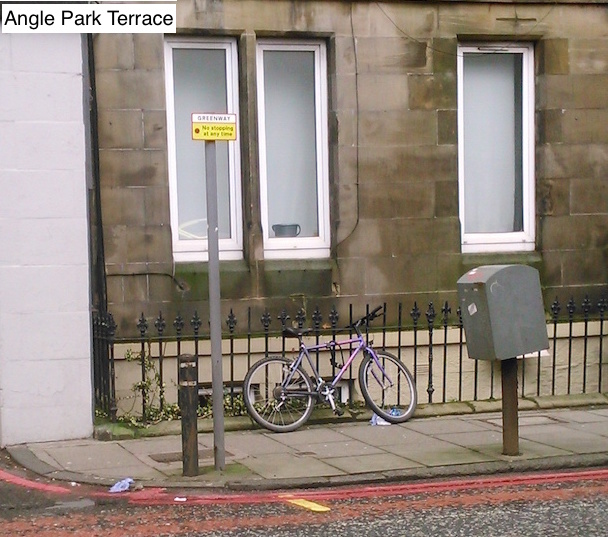
Bollard and pole

Bollards are generally used to deter pavement parking, and in many places, may be the lesser of two evils in performing this function. So it is regrettable to see the common sight of bollards adjacent to other street furniture (often signage poles)…assuming the pole is was put in after the bollard, the  bollard could (should) have been removed. And I understand that the mail box to the left is also redundant (thanks to @Paul)
Picture

‘Island’ bollard

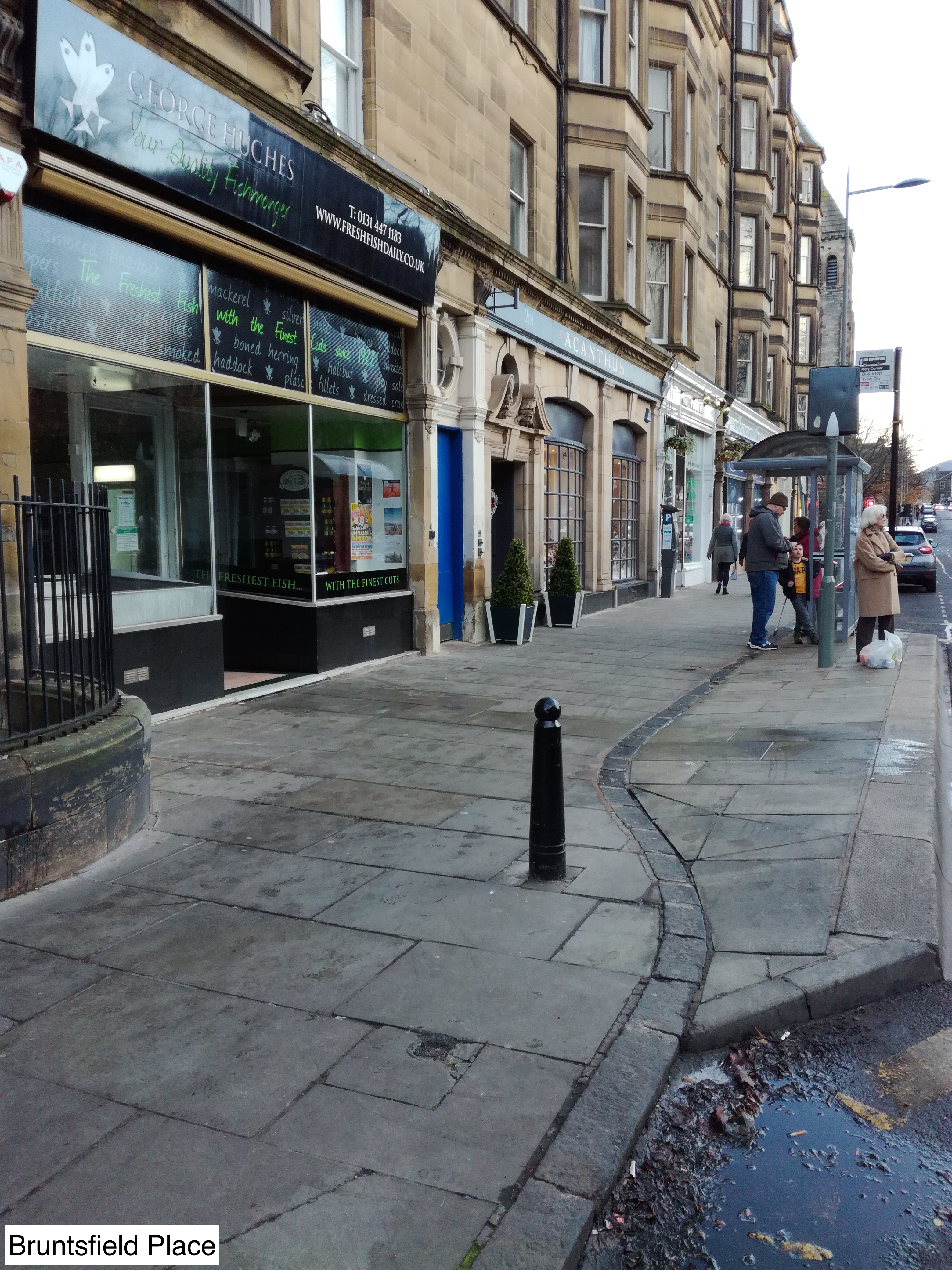
Here is another bollard issue - the pavement here (Bruntsfield, Edinburgh) was recently repaired to a good standard having been in poor condition. The work stopped just short of an obsolete bollard which was on an old kerb line. Since the bus boarder was installed some years ago, the bollard has been a redundant relic, pretty much in the pedestrian desire line. Why wasn’t it removed when the paving was re-laid?
Picture
0 Comments

Pedestrian Hazard bingo!

11/11/2016

54 Comments

 
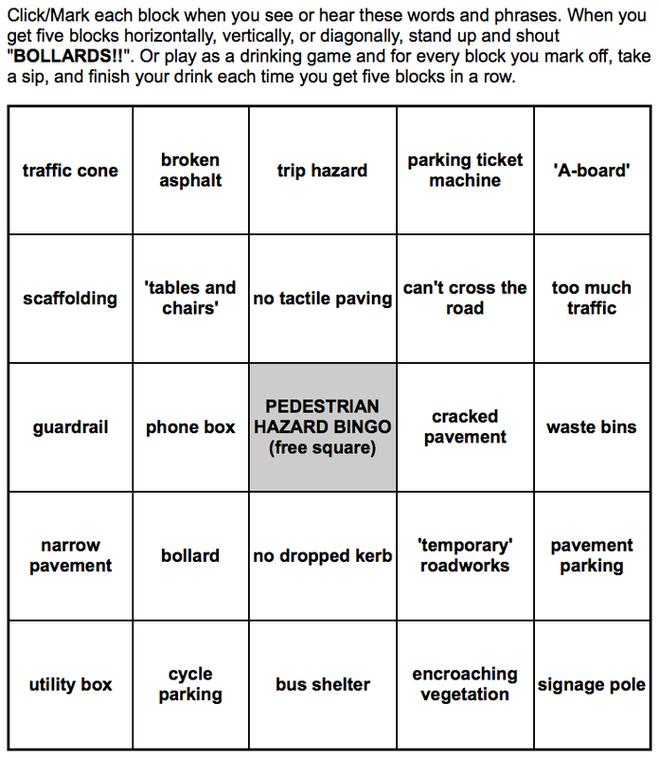
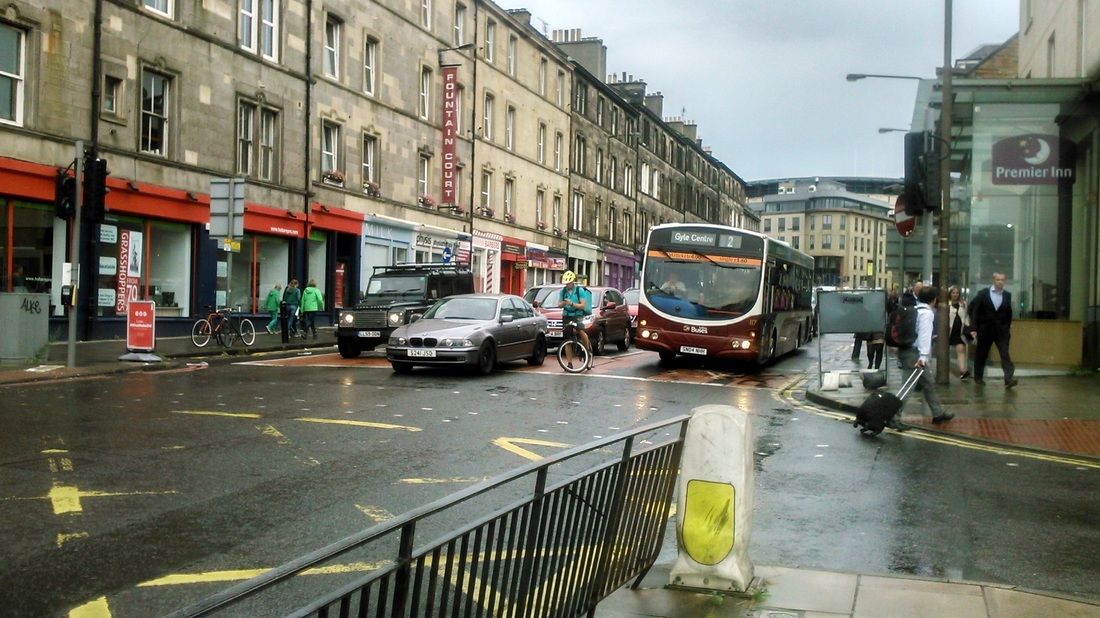
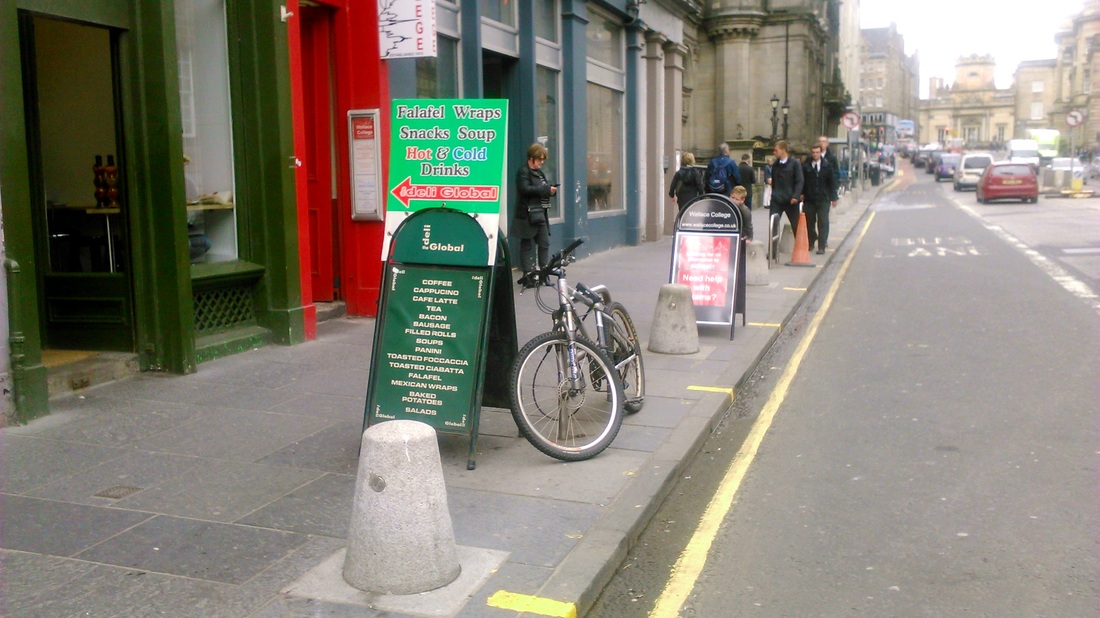
Thanks to http://bullshitbingo.net, I’ve devised this bingo card for spotting pedestrian problems with the street.  I hope that this might be a fun way of helping people to notice problems with the street from the walking viewpoint; any feedback very welcome! ​
Picture
Picture
Picture
54 Comments

Now is the time to declutter our streets

11/8/2016

0 Comments

 
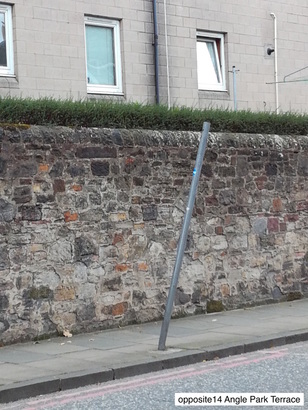
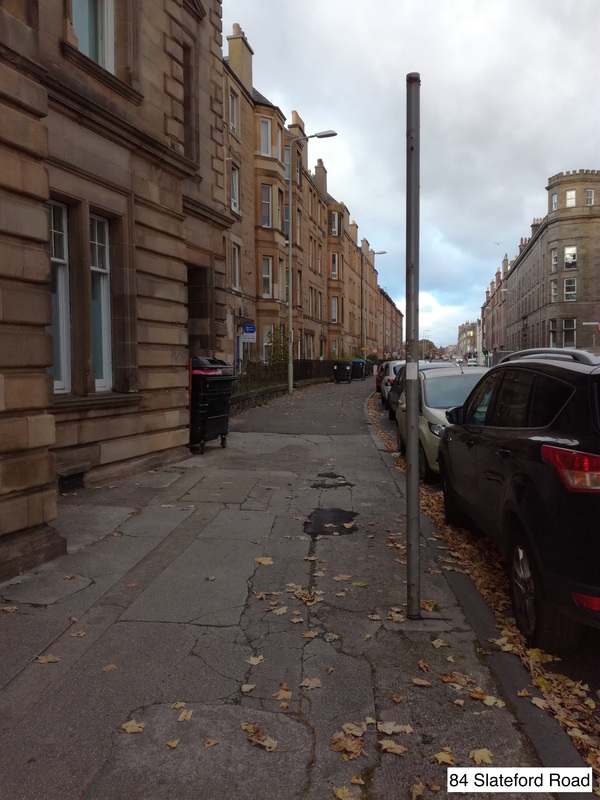
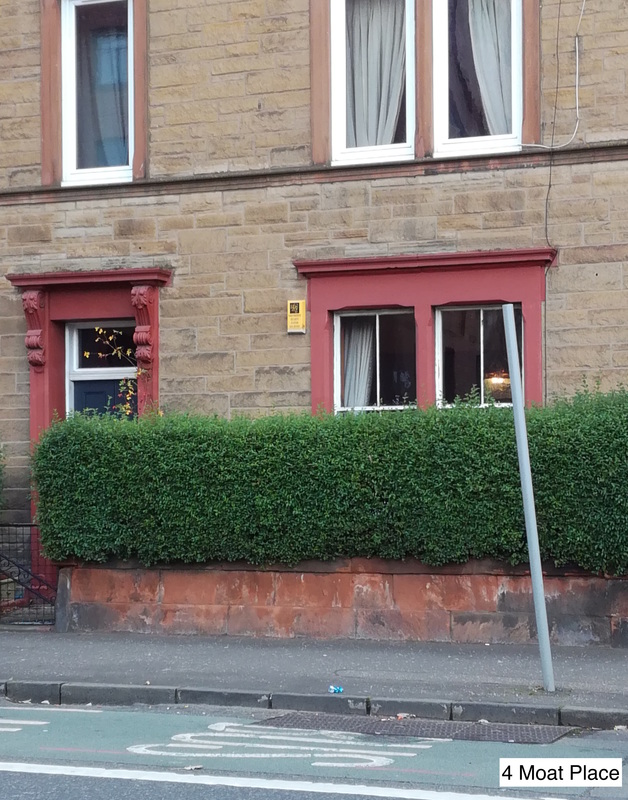
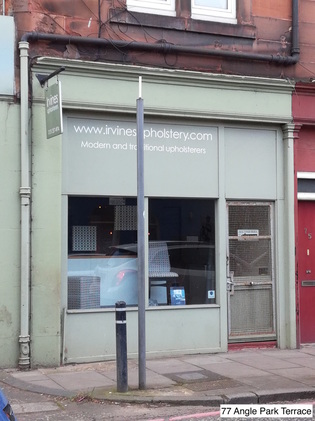
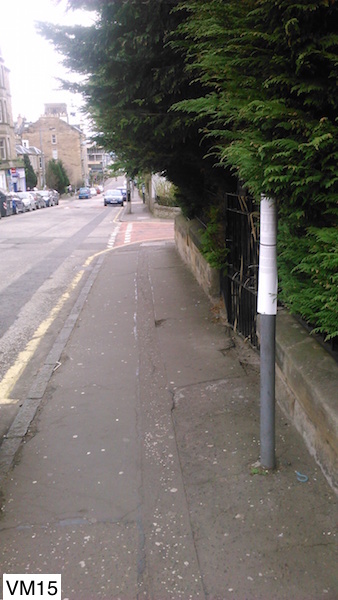
Many of our streets are littered with signage poles. A significant opportunity to do something about this lies in the latest version of the statutory guidance Traffic Signs Regulations and General Directions 2016 (TSRGD). This specifically aims to reducing signage clutter, particularly eliminating the need for signs mounted on poles to show parking and loading restrictions.  Perhaps most irksome of all are the dozens of bare poles which carry no sign at all. These will have carried parking or loading signs at one time, but they have for months - or possibly years - been bare, serving no purpose other than to obstruct pedestrians. I counted five such poles in one kilometre stretch of Slateford Road. These can now all be removed entirely without undermining the traffic orders that regulate the parking and loading restrictions in place. Will Edinburgh - and other councils - seize this opportunity to clean up our streets?
Picture
Picture
Picture
Picture
0 Comments

My top ten (i.e. worst) street obstructions

9/18/2016

0 Comments

 
I strongly believe that the best way to encourage people to walk is to make streets nice places to walk in. But our streets are full of obstacles which make using them less pleasant, easy and safe places to use. Walking is the most inclusive, sustainable and healthy way of getting about and it is fundamental to getting our cities towns and villages working as communities. If we removed the clutter on our pavements, it would be a real ‘quick win’ to encourage more people to use our streets more often. 

This is my current top ten ‘hates’ of clutter encountered on the streets, mostly from near my home in Edinburgh. I could possibly stretch to a top 20 I have missed out some obvious candidates like waste bins, unprotected scaffolding and minor irritations like urban runners (the Royal Mile is not the place to go for a run)…

Number 10: Flappy cables

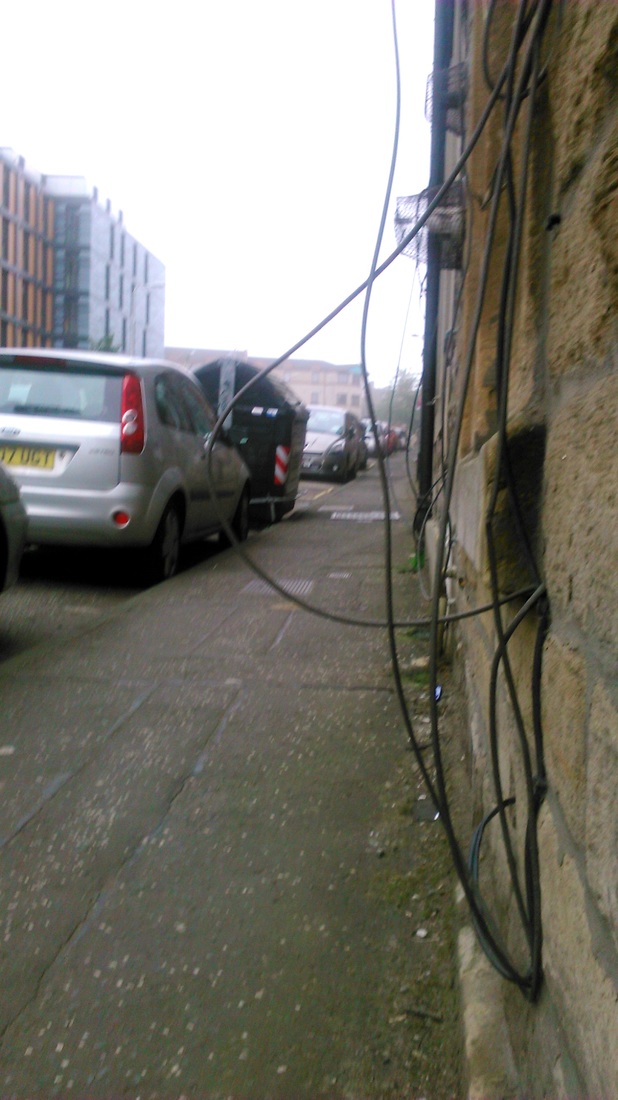
This is a relative new menace to our streets - cables hanging from buildings, often flapping loose in the wind. Often they are attached to nothing, and probably serve no useful purpose. They don’t do much aesthetically for a street either, but no one seems to see them as their responsibility…?
Picture

Number 9: Guardrails

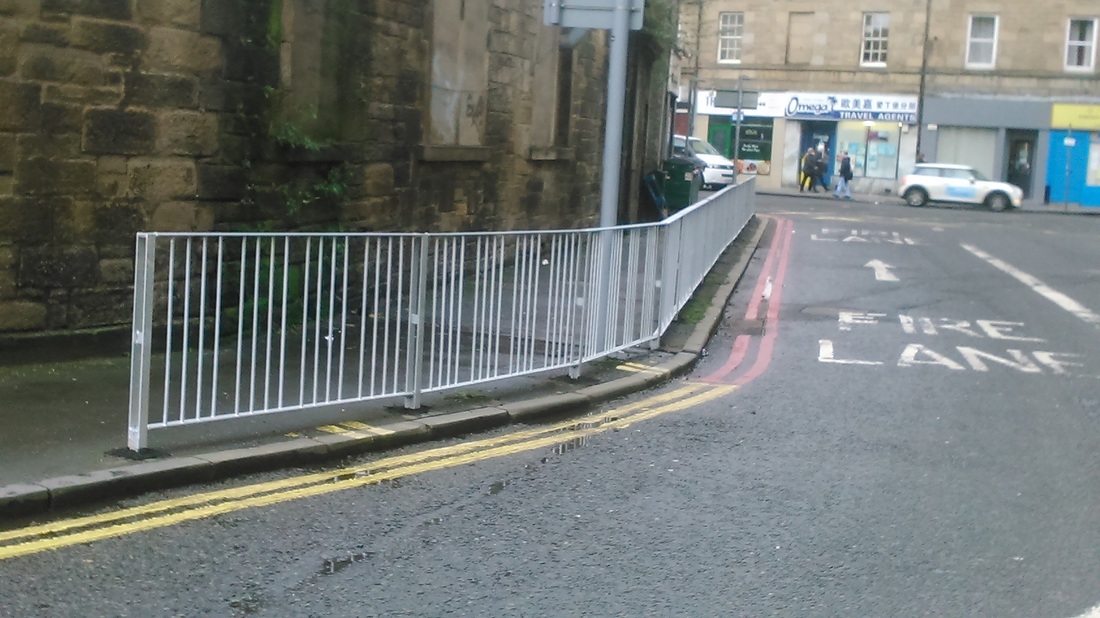
New street design guidance - both locally in Edinburgh and nationally - has a presumption against railings. But they seem to hang on tenaciously, more frequently stopping people go where they want to than protecting them, I think. I was pleased to see them being removed in Tollcross last year - and less pleased to see them then replaced by a brand new new lot. Our risk-averse engineering culture means they are here for a while yet…
Picture

Number 8: Phone boxes 

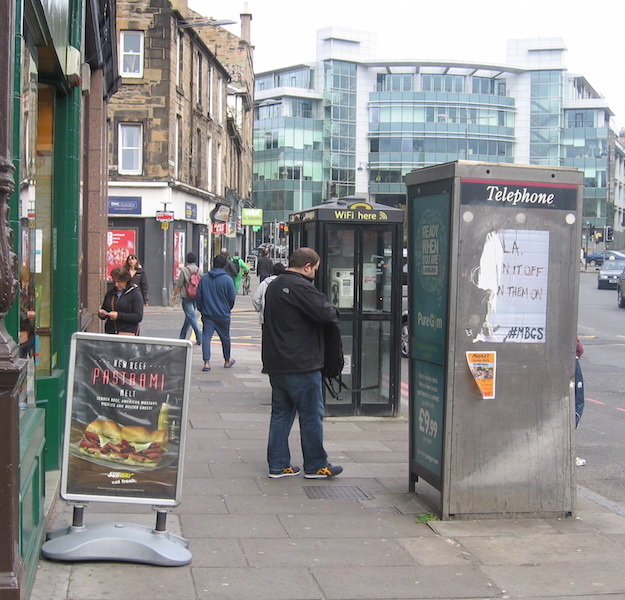
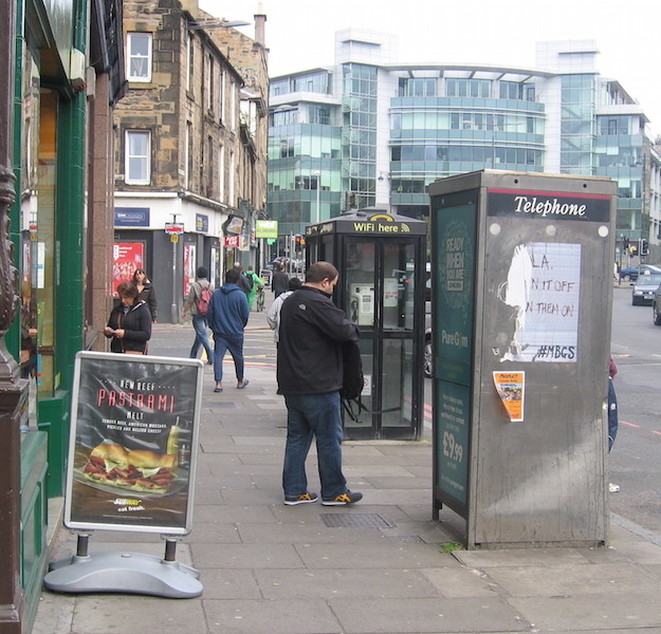
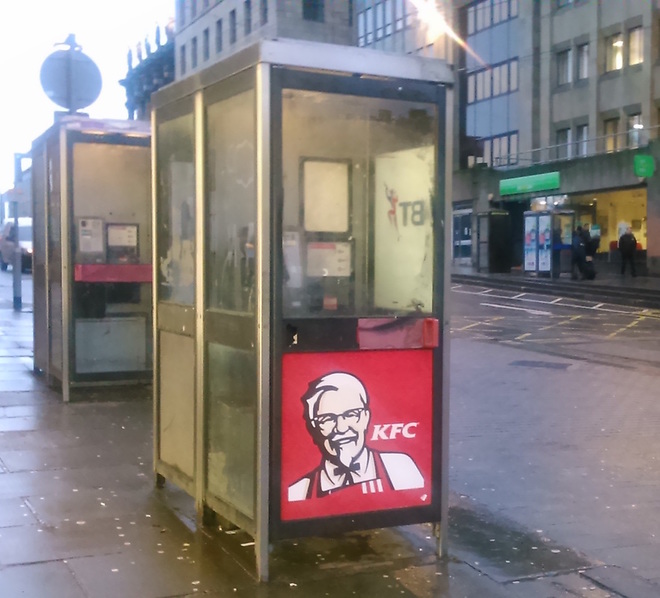
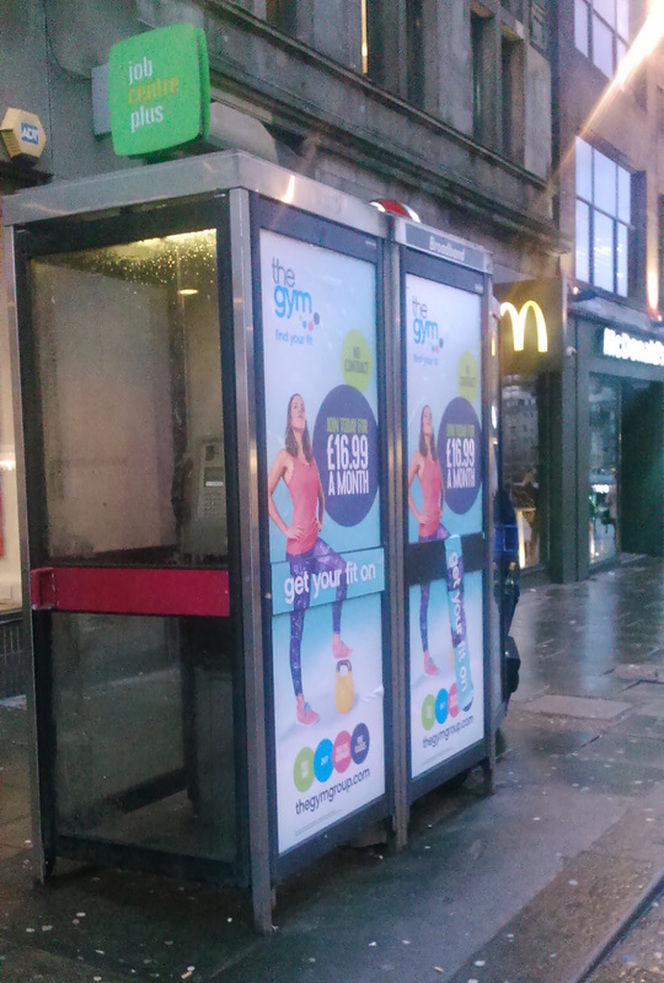
​I have already complained about the curse of unnecessary phone boxes, which are really just advertising boards.  So I’ll not harp on about them again. But along with cash machine kiosks and other such stuff, they (mostly) need to go.
Picture

Number 7: Cycle parking 

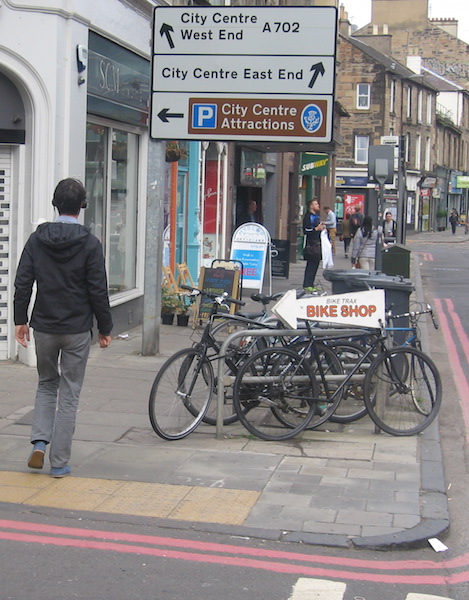
​Cycling is on the increase: good. Bikes on the pavement are also on the increase: not good. Keep them on the road please, preferably in well-designed cycle parking. Or if cycle parking must be on the pavement, please put them in suitable nooks and crannies, well away from the desire line of people on foot…
Picture

​Number 6: Vegetation 

​Overhanging trees and especially protruding hedges are everywhere. It is not uncommon to see the space available to people walking halved by encroaching shrubs. How often do council inspectors knock on a door and draw this to the attention of their owners? Never, I would think…
Picture

Number 5: (Highway) rubbish

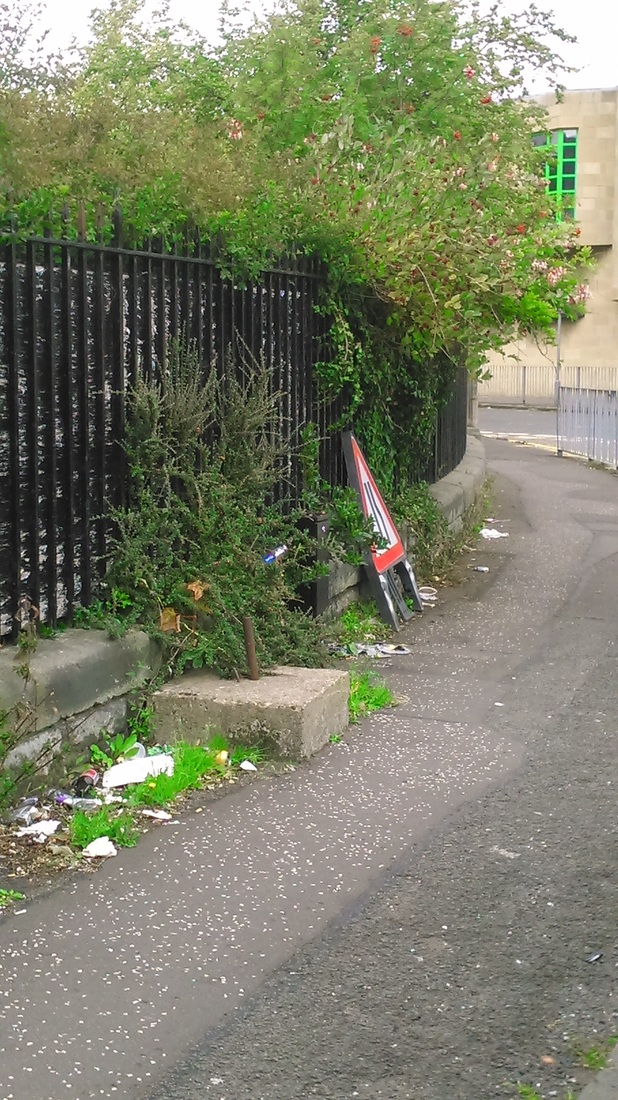
Rubbish in the street is not nice for anyone, but can also be hazardous. Mattresses and such like are frequently dumped, sometimes blocking the whole footway. To be fair, my council (Edinburgh) usually removes this kind of thing fairly quickly, and it would help if people stopped anti-social fly-tipping. But worse is the rubbish left by the council and its contractors itself: the traffic cones and all the other highways rubbish that seems to perpetually litter our streets - sandbags, barriers, and such like. They are everywhere. And they shouldn’t be.

Picture

​Number 4: ‘A-boards’ 

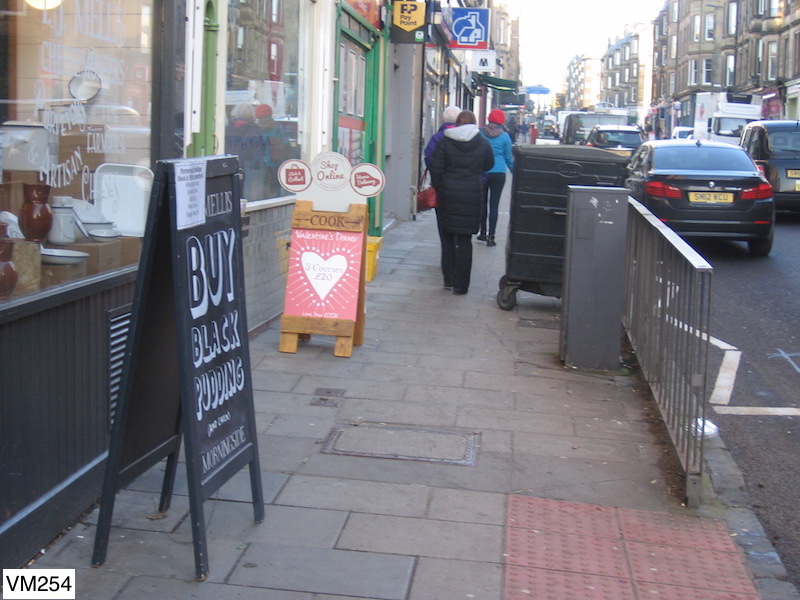
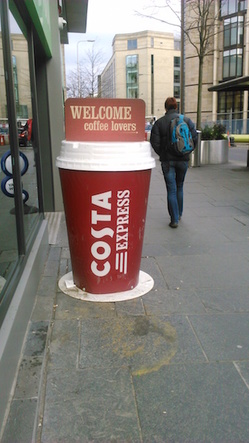
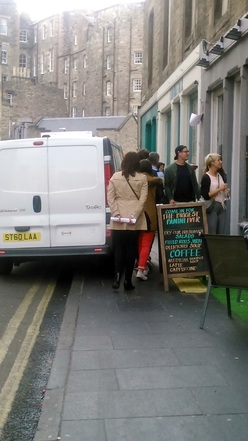
There currently appears to be a retailers’ “arms race” going on - more and bigger ‘A-boards’ and similar clutter filling up pavement space which is meant for people. The worst offenders often seem to be not your local independent shop, but high street giants like Sainsburys, Greggs and Costa. Check these out for size!  No wonder Living Streets Edinburgh has started a campaign for a wholesale review of policy and practice.
Picture
Picture
Picture

Number 3: ‘Temporary’ road signs on the pavement

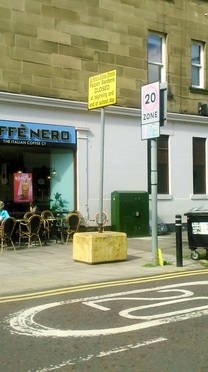
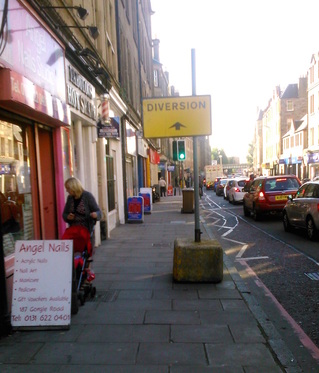
​Into the top three now; yes these are my top hates at the moment: Roadworks signs on the pavement. They are supposed to comply with the statutory Code, but often don’t. They also often linger long after their original purpose has expired. Special mention must go to “diversion” signs…in my own street, I have seen a sequence of signs reading: “diversion”, “end of diversion” and then, surprise, surprise, “diversion” again. And worst of all are signs mounted in 900kg concrete blocks, taking up half the pavement which seem to be everywhere. Ban them; put temporary signs on lamp posts instead.
Picture
Picture

​Number 2: Signage poles

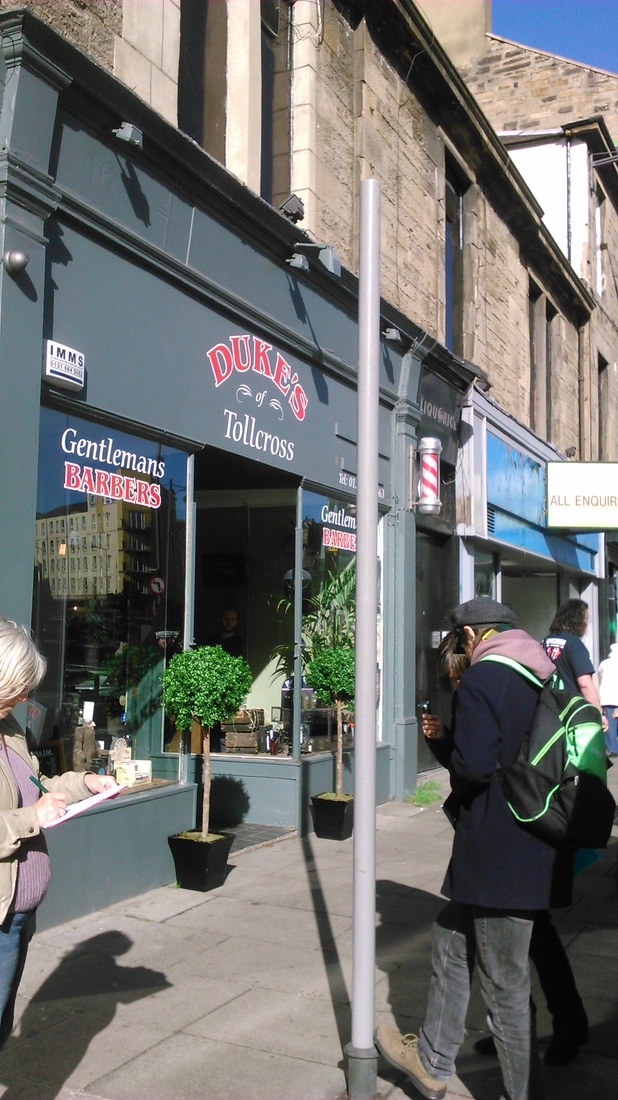
​I am known for my dislike of signage poles, I confess. Poles with parking signs, poles with signs directing you (ie motorists) to an amenity…above all, poles with nothing on them whatsoever. Design guidance couldn’t be clearer - signage should be minimised, and where it is needed, it should be mounted on lamp posts, buildings or other infrastructure.  But old habits die hard. We are still sticking new poles everywhere, let alone de-cluttering our streets - every new initiative (safe routes to school, trams, parking zones) brings a new clutch of signs and poles…
Picture

​Number 1: Pavement parking

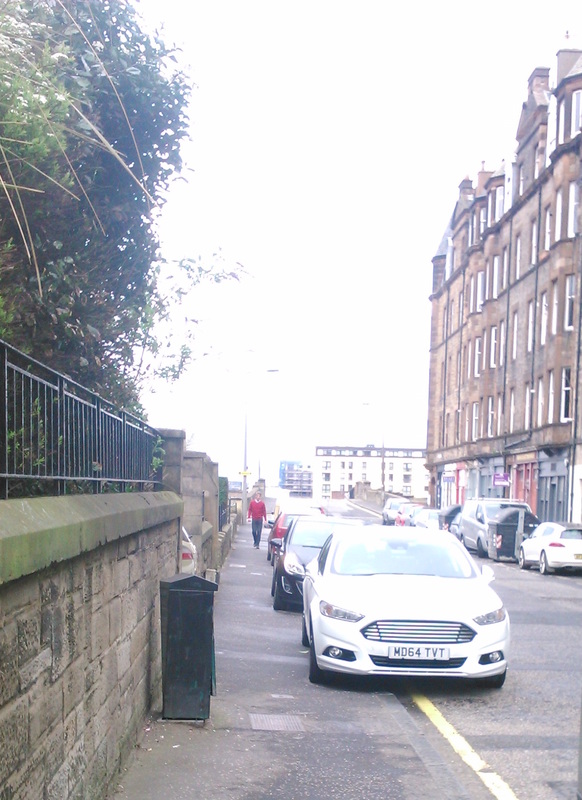
And so to Number One. Parking on the pavement is not on. But in Edinburgh, while you are pretty much guaranteed a parking ticket if you overstay your time limit in a controlled parking zone bay, no one seems to take responsibility for vehicles parked on the pavement. Let’s hope the promised  Footway Parking and Double Parking (Scotland) Bill will really put an end to this. ​
Picture
Picture
0 Comments

Any call for so many phone boxes..?

2/6/2016

7 Comments

 
Have you ever noticed that there seem to be an awful lot of phone boxes in Edinburgh streets?     (I’m not talking here about traditional red phone boxes, by the way: rather the unlovely, utilitarian payphone). In the age of the ubiquitous mobile phone, do we need so many of these square boxes in our already-cluttered pavements? I first became curious about this phenomenon while trying - successfully, eventually! - to get this redundant phone box removed from Tollcross as a result of a street audit for Living Streets Edinburgh.
Picture
Indeed, BT reports that a third of their pay phones have been removed, because most phone boxes lose money; calls from their payphones have fallen by more than 80% in the past ten years. But according to UK payphone.com there are 1,379 in Edinburgh.  In South St Andrews Street, just off Edinburgh’s Princes Street, there are no fewer than seven payphone within the space 40 metres. Is it conceivable that there is ever a demand for all these phones at any one time?
Picture
Could this proliferation possibly be connected with BT’s partnership with street furniture and advertising giant JC Decaux? JC Decaux’s “StreetTalk” is a roadside advertising programme aimed particularly at young people which seems to use BT phone boxes as prime advertising sites. JCDecaux’s website boasts that “StreetTalk’s domination of the high street means that campaigns can get right in on the action”. Of course, phone boxes are not the only - or no doubt the worst - culprit cluttering our streets, but there is something objectionable, sneaky even, about a street advertising programme that masquerades as a public service. 

Scottish councils have clear powers under the Roads (Scotland) Act 1984 to remove obstructions from our streets. It would be nice to see councils using these powers more vigorously to reduce phone boxes (and all other useless things which clutter our towns and cities) to make our streets more attractive and easy places for people to use. The latest Ofcom guidance (5) on the subject I could find seems to be ten years old; it is mostly concerned with the process for removing phone boxes (to protect rural communities where a phone box might be a crucial lifeline). Perhaps Ofcom could provide some leadership here too?
Picture
7 Comments
Forward>>

     “I hate the way everyone responsible for urban life seems to have lost sight of what cities are for. They are for people” Bill Bryson, Neither here Nor there, 1991 p61

    Welcome to my occasional blog: mostly this is about making public places inclusive and attractive, but I may touch on other policy and governance topics…


    Archives

    August 2023
    April 2023
    November 2022
    January 2022
    May 2021
    March 2021
    December 2020
    December 2019
    July 2019
    April 2019
    February 2019
    January 2019
    September 2018
    April 2018
    January 2018
    December 2017
    November 2017
    August 2017
    May 2017
    February 2017
    January 2017
    December 2016
    November 2016
    September 2016
    February 2016

    Categories

    All

    RSS Feed

Powered by Create your own unique website with customizable templates.